

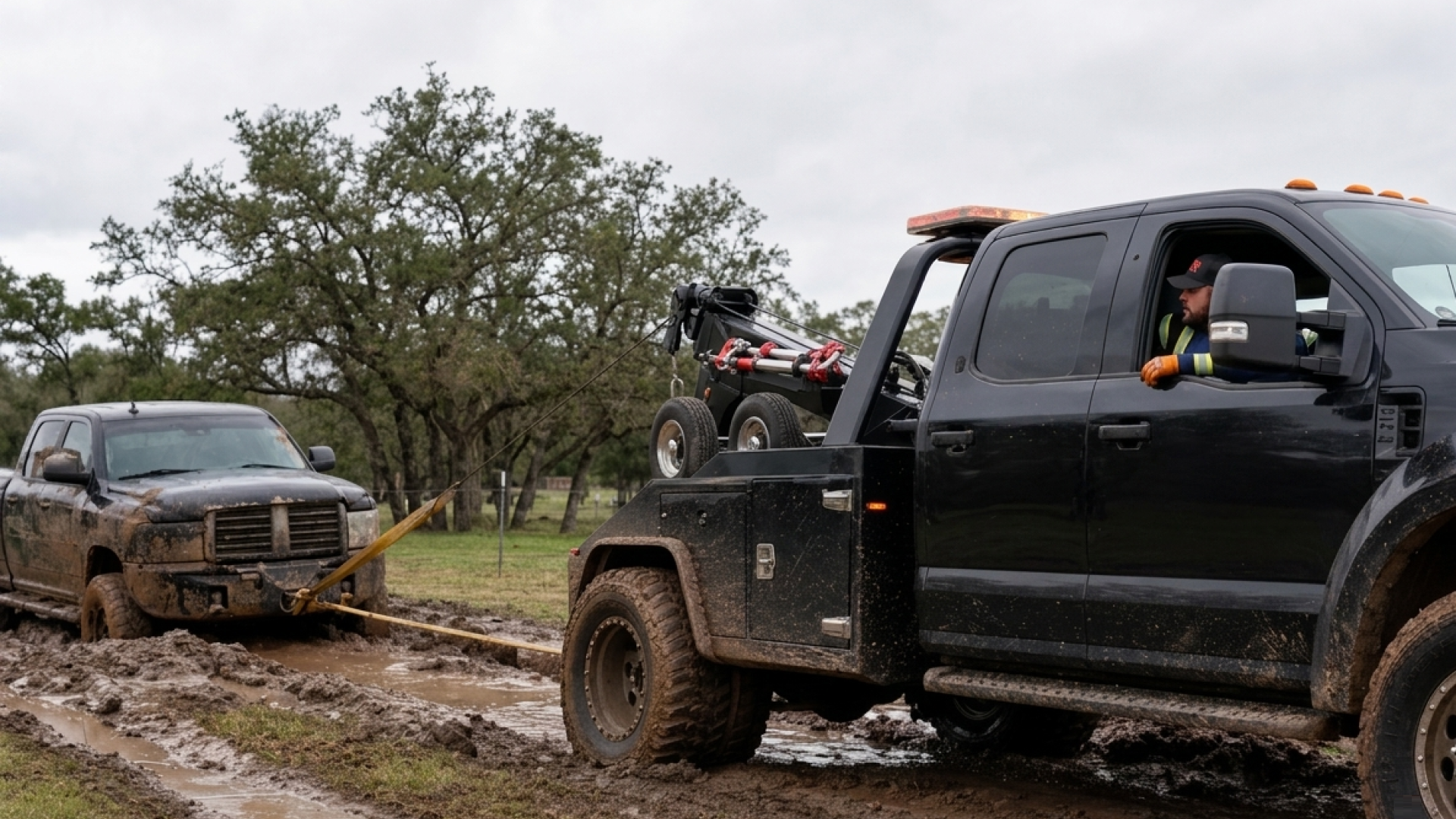
A vehicle does not always need a standard tow. Sometimes the bigger problem is getting the vehicle out of the position where it has become stranded. If a car, SUV, or truck is stuck in mud, sand, a ditch, or another difficult location, attempting to drive it out—or pulling it with another vehicle—can create additional risks. That is where professional vehicle recovery services can make a difference.
Vehicle recovery focuses on safely retrieving a vehicle that cannot be moved normally. Depending on the situation, recovery may be followed by towing if the vehicle is damaged or otherwise unsafe to drive.
For Miami drivers, understanding when you need professional vehicle recovery services can help you respond appropriately to an unexpected roadside emergency. A&G Towing Services provides vehicle recovery along with towing and other roadside assistance services, including jump starts, flat tire assistance, fuel delivery, and vehicle lockout assistance.
This guide explains what vehicle recovery is, the situations that commonly require it, how the recovery process works, what mistakes to avoid, and when recovery and towing may be needed together.
What Are Professional Vehicle Recovery Services?
Professional vehicle recovery is the process of safely retrieving, extracting, or repositioning a vehicle that has become stranded or difficult to move.
Unlike a straightforward tow—where a vehicle can generally be accessed and loaded—recovery is often necessary when the vehicle's position presents an additional challenge.
A vehicle may require recovery if it is:
Stuck in mud
Stuck in sand
Partially or completely off the roadway
In a ditch
Unable to move because of its position
Difficult to access with conventional towing equipment
Immobilized in an unusual location
The purpose of recovery is to get the vehicle into a safer and more accessible position.
Once that has been accomplished, the vehicle may be driven away if it is safe to do so, or it may require towing to a repair facility.
When Do You Need Professional Vehicle Recovery?
The simplest rule is this:
If your vehicle cannot safely move from its current position because it is stuck, off the road, or difficult to access, professional recovery may be appropriate.
Several situations commonly call for recovery assistance.
1. Your Vehicle Is Stuck in Mud
Soft or saturated ground can quickly reduce tire traction.
A vehicle may initially appear capable of moving, but repeated acceleration can cause the tires to spin and dig deeper into the surface. Once the vehicle settles farther into the mud, getting it out can become considerably more difficult.
Professional vehicle recovery can help remove the vehicle without relying on increasingly aggressive attempts to drive it free.
Why continuing to accelerate can be a problem
When tires spin without gaining traction, they can dig into the surface underneath them. This may:
Make the vehicle sink farther
Reduce available traction
Increase stress on drivetrain components
Make later recovery more difficult
If the vehicle isn't responding to normal driving, stopping the attempt and requesting professional assistance can be the safer choice.
2. Your Vehicle Is Stuck in Sand
Sand can create a similar problem.
A vehicle may become immobilized at a beach, sandy access road, construction area, or another location with loose ground.
The vehicle's tires can lose traction, especially when the vehicle's weight causes them to sink into the surface.
If basic attempts to move the vehicle aren't working, professional recovery can help rather than continuing to spin the tires.
3. Your Vehicle Has Slid Into a Ditch
A vehicle entering a ditch is one of the clearest examples of a situation that may require recovery rather than ordinary towing.
Even if the vehicle still starts, its position can make normal driving impossible.
Depending on how it entered the ditch, the vehicle may also have:
Damaged tires
Wheel damage
Suspension damage
Steering problems
Body damage
Trying to drive out without knowing whether the vehicle has sustained mechanical or structural damage can make the situation worse.
Professional recovery allows the vehicle's position and condition to be assessed before attempting to move it.
4. Your Vehicle Has Left the Roadway
A vehicle does not necessarily need to be completely stuck to require recovery.
If it has moved onto uneven ground, soft terrain, a roadside depression, or another difficult area, standard towing may not be enough.
The recovery process may first involve getting the vehicle back into a position where it can be safely accessed and transported.
5. Your Vehicle Cannot Be Moved Normally
Sometimes the issue isn't simply where the vehicle is located.
Mechanical or accident-related damage can prevent wheels from moving properly or make the vehicle difficult to position for standard towing.
Examples can include severe wheel or tire damage, collision-related problems, or other conditions that prevent the vehicle from rolling normally.
A professional assessment can help determine whether recovery equipment or a different towing approach is required.
6. The Vehicle Is in a Difficult-to-Access Location
The surrounding environment can also determine whether recovery is necessary.
Examples may include:
Uneven terrain
Narrow access areas
Off-road positions
Locations where the vehicle cannot be approached normally
Areas where the vehicle cannot simply be driven onto towing equipment
In these cases, the first challenge may be accessing and repositioning the vehicle rather than transporting it.
Vehicle Recovery vs. Towing: What's the Difference?
The terms are often used together, but they describe different parts of the process.
Towing primarily means transporting a vehicle.
Recovery primarily means retrieving or extracting a vehicle from a difficult position.
For a broader explanation of the distinction, see vehicle recovery vs. towing.
Consider two different scenarios.
Scenario 1: Vehicle breakdown
Your car stops on a normal roadway because of a mechanical problem. It is accessible, but it cannot safely be driven.
Towing may be all that is required.
Scenario 2: Vehicle in a ditch
Your vehicle leaves the roadway and becomes stuck in a ditch.
The vehicle first needs to be recovered from the ditch. Once it is accessible, it may then need to be towed to a repair facility.
So a roadside emergency can involve:
Recovery → repositioning → towing → repair facility
Understanding this distinction can help you provide better information when calling for assistance.
How Does Professional Vehicle Recovery Work?
Every recovery situation is different, so the exact procedure depends on the vehicle and its location.
However, the process generally starts with an assessment.
Step 1: Describe the Situation
When requesting assistance, explain what happened.
For example:
"My vehicle slid off the road and is partially stuck in a ditch."
That is more useful than simply saying:
"I need a tow."
The more accurately you describe the situation, the better the provider can understand what type of assistance may be required.
Step 2: Provide Your Exact Location
Location is particularly important for vehicle recovery.
Provide information such as:
Street name
Nearest intersection
Highway or exit
Nearby landmark
Parking area
Direction of travel
If your vehicle is off the roadway, explain where it is relative to the road.
Step 3: The Vehicle and Surroundings Are Assessed
The recovery operator needs to understand the vehicle's position and condition.
Important considerations can include:
How deeply the vehicle is stuck
Whether the vehicle can move
Tire condition
Wheel condition
Visible damage
Ground conditions
Accessibility
Surrounding obstacles
Step 4: The Vehicle Is Recovered
The appropriate recovery approach is used to move the vehicle out of its difficult position.
The objective is controlled movement rather than simply applying as much force as possible.
Step 5: The Vehicle May Be Towed
After recovery, the vehicle may be assessed to determine whether it is safe to drive.
If damage or a mechanical problem prevents normal operation, towing may be the next step.
For additional information about protecting your vehicle during towing, see how professional towing prevents further vehicle damage.
Why Shouldn't You Try to Recover a Stuck Vehicle Yourself?
When a vehicle is stuck, the instinct to "just pull it out" can be strong.
However, improvised recovery can create additional hazards.
Using another vehicle, rope, chain, or unsuitable equipment can result in:
Vehicle damage
Equipment failure
Sudden vehicle movement
Loss of control
Damage to surrounding property
Personal injury
The weight and position of a stranded vehicle also matter.
A recovery attempt that appears simple can become unpredictable if the vehicle suddenly breaks free.
Professional recovery is designed to provide a more controlled solution.
For more information, see why you should never attempt DIY towing in Miami traffic.
What Should You Do Before Recovery Assistance Arrives?
While waiting for professional vehicle recovery, focus on safety.
Turn on Your Hazard Lights
If your vehicle is near traffic, hazard lights can increase visibility to approaching drivers.
Avoid Unnecessary Movement
If the vehicle is stuck, repeatedly attempting to drive it out may make the situation worse.
Stay Aware of Traffic
If the vehicle is near a roadway, watch for approaching traffic and avoid standing in unsafe areas.
Tell the Provider About Any Visible Damage
Mention any obvious problems such as:
Flat tires
Damaged wheels
Collision damage
Broken suspension components
Fluid leaks
This information can help the recovery team understand the situation.
Don't Stand Near Recovery Equipment
If recovery equipment is being used, follow the operator's instructions and stay in a safe position.
For additional roadside safety guidance, see top safety tips while waiting for a tow truck in Miami.
Can Recovery Be Needed After an Accident?
Yes.
A collision can cause a vehicle to leave the roadway or become positioned somewhere that prevents normal towing.
For example, a vehicle may slide into a ditch after an accident or become immobilized on uneven ground.
In such circumstances, recovery may be necessary before the vehicle can be transported.
Even when there is no obvious exterior damage, continuing to drive after a significant incident may be unsafe if steering, suspension, wheels, or other components have been affected.
For more information, see how emergency towing helps protect your vehicle after an accident.
Can a Flat Tire Require Vehicle Recovery?
Usually, a simple flat tire can be addressed through roadside tire assistance.
However, circumstances can make the situation more complicated.
For example, a vehicle could have:
Multiple flat tires
Severe wheel damage
A vehicle position that prevents normal tire service
Additional damage that prevents safe movement
A&G Towing Services offers flat tire assistance as well as vehicle recovery, allowing the appropriate roadside solution to be considered based on the actual situation.
For more information about flat tire safety, see how flat tire assistance keeps Miami drivers safe on busy roads.
What If the Vehicle Is Stuck but Still Runs?
A running engine does not necessarily mean a vehicle should be driven.
A vehicle can remain mechanically operational while being physically trapped.
If the tires are spinning without moving the vehicle, the vehicle is sitting at an unsafe angle, or the surrounding terrain makes movement risky, continuing to drive may not be advisable.
The key question isn't simply:
"Does the engine start?"
It's:
"Can the vehicle be moved safely from its current position?"
If the answer is no, professional recovery may be the better option.
What If the Vehicle Won't Start?
A vehicle that won't start doesn't automatically require recovery.
If it is sitting normally on an accessible roadway or parking area, standard towing or another roadside service may be sufficient.
For example, A&G Towing Services provides:
A dead battery might be resolved with a jump start. An empty fuel tank may require fuel delivery. A vehicle that remains disabled may ultimately need towing.
The location and condition of the vehicle determine whether recovery is necessary.
When Is Recovery Followed by Towing?
Recovery and towing commonly work together when a vehicle is both stranded and undrivable.
For example:
A vehicle leaves the roadway.
It becomes stuck in a ditch.
A recovery service extracts it.
The vehicle is assessed.
Damage makes driving unsafe.
A towing service transports it to a repair facility.
This is why choosing a roadside assistance provider that offers both recovery and towing can simplify an emergency.
How to Request Professional Vehicle Recovery in Miami
When contacting a recovery provider, provide as much useful information as possible.
Explain what happened
Describe whether the vehicle:
Slid off the roadway
Became stuck in mud
Became stuck in sand
Entered a ditch
Lost traction
Was involved in an accident
Describe the location
Be specific about where the vehicle is located.
Describe the vehicle
Give the make, model, color, and general condition.
Explain whether it can move
Tell the provider whether the vehicle starts, rolls, steers, or is completely immobilized.
Mention visible damage
If you see damaged tires, wheels, suspension, or body components, explain what you can observe.
This information helps the provider understand the type of situation before assistance arrives.
Why Professional Vehicle Recovery Matters in Miami
Miami drivers can encounter a wide range of roadside conditions, from busy urban roads and parking areas to locations with loose, wet, or uneven ground. A vehicle that leaves a normal driving surface can quickly become much more difficult to move.
Professional recovery can be particularly useful when a vehicle is stuck or positioned somewhere that makes ordinary towing impractical.
A&G Towing Services provides vehicle recovery in Miami and surrounding areas, in addition to towing and other roadside assistance services. Its service options include jump starts, flat tire assistance, fuel delivery, and vehicle lockout assistance, giving drivers access to several solutions depending on the cause of the emergency.
Frequently Asked Questions
When do I need professional vehicle recovery services?
You may need professional recovery when your vehicle is stuck in mud, sand, a ditch, or another difficult location, or when its position prevents normal towing.
Is vehicle recovery the same as towing?
No. Recovery focuses on extracting or repositioning a stranded vehicle, while towing primarily involves transporting a vehicle from one location to another.
Can a car stuck in a ditch be recovered?
Yes. A vehicle stuck in a ditch may require professional recovery to safely extract and reposition it before it can be towed or driven.
Should I keep driving if my vehicle is stuck in mud?
Repeatedly accelerating can cause the tires to spin and potentially make the vehicle more difficult to recover. If the vehicle isn't moving normally, professional recovery may be safer.
Can vehicle recovery be needed after an accident?
Yes. If an accident causes a vehicle to leave the roadway, enter a ditch, or become difficult to access, recovery may be required before transportation.
What if my vehicle is stuck in sand?
Avoid repeatedly spinning the tires. If the vehicle cannot move safely, contact a professional vehicle recovery service.
Can recovery and towing be used together?
Yes. A vehicle may first be recovered from a ditch, mud, sand, or another difficult position and then towed to a repair facility if it cannot be safely driven.
What information should I provide when requesting vehicle recovery?
Provide your exact location, vehicle information, what happened, where the vehicle is positioned, whether it can move, and any visible damage.
Can roadside assistance solve a problem without vehicle recovery?
Sometimes. A jump start, flat tire service, fuel delivery, or vehicle lockout service may resolve the problem when the vehicle is otherwise safely accessible and movable.
Conclusion
Knowing when you need professional vehicle recovery services can help you avoid turning a difficult roadside situation into a bigger problem.
Recovery is generally appropriate when a vehicle is stuck, off the roadway, in a ditch, on loose terrain, or otherwise positioned where ordinary towing cannot safely accomplish the job. Mud, sand, difficult terrain, accident-related positioning, and certain vehicle damage can all create situations where extraction or repositioning is necessary before transportation.
The most important thing is not to assume that a stuck vehicle can be freed by simply accelerating harder or pulling it with another vehicle. Improvised recovery can create additional damage and safety risks. Instead, describe the situation accurately, provide your location, and allow a professional recovery operator to determine the appropriate approach.
Once the vehicle is safely recovered, it may be possible to drive it normally—or it may need towing if damage or a mechanical problem prevents safe operation.
Need Professional Vehicle Recovery in Miami?
If your vehicle is stuck, off the roadway, in a ditch, or difficult to move, A&G Towing Services provides vehicle recovery assistance in Miami and surrounding areas. The company also offers towing, jump starts, flat tire assistance, fuel delivery, and vehicle lockout services for other roadside emergencies.
Visit A&G Towing Services to learn more about available roadside assistance and vehicle recovery services.
