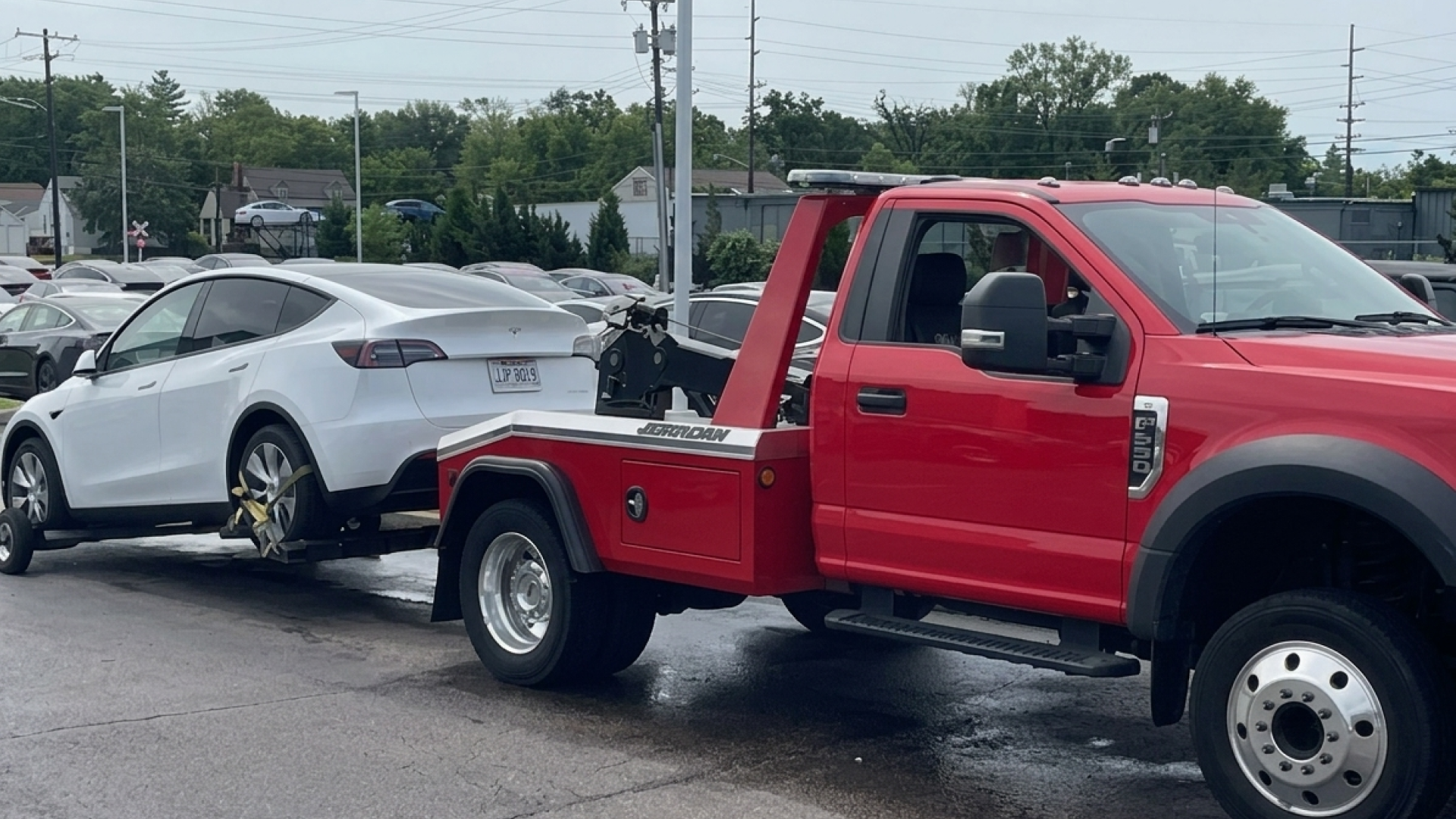
When a vehicle breaks down or becomes stranded, many drivers use the terms vehicle recovery and towing interchangeably. While both services help move vehicles that cannot continue normally, they are not exactly the same. The main difference is the condition and location of the vehicle and the type of work required to move it safely.
Towing generally involves transporting a vehicle from one accessible location to another, such as moving a disabled car from the roadside to a repair facility. Vehicle recovery, on the other hand, is typically needed when a vehicle is stuck, difficult to access, or cannot simply be loaded and transported through a standard towing procedure.
Understanding vehicle recovery vs. towing can help you know what type of roadside assistance to request when something goes wrong. A&G Towing Services provides towing and vehicle recovery in Miami, along with other roadside services such as jump starts, flat tire assistance, fuel delivery, and vehicle lockout assistance.
This guide explains how towing and vehicle recovery differ, when each service is appropriate, what happens during the process, and how to determine which type of assistance you may need.
What Is Towing?
Towing is the transportation of a vehicle that cannot or should not be driven under its own power.
A typical towing situation involves a vehicle that is accessible and can be loaded onto or connected to towing equipment without requiring extensive recovery work.
Examples include:
A car that has experienced a mechanical breakdown
A vehicle that will not start
A car that needs transportation to a repair shop
A vehicle with severe tire damage that cannot safely continue
A disabled vehicle that needs to be moved from one location to another
A vehicle involved in an incident that can still be accessed normally
The primary purpose of towing is transportation.
The vehicle is loaded, secured, transported, and unloaded at the destination.
What Is Vehicle Recovery?
Vehicle recovery is the process of getting a vehicle out of a difficult, inaccessible, or compromised position before it can be transported or returned to a safe location.
A vehicle may require recovery when it is:
Stuck in mud
Stuck in sand
Off the roadway
In a ditch
On uneven terrain
Difficult to access
Unable to move normally
In these situations, simply connecting a tow truck may not be enough.
The vehicle may first need to be carefully repositioned or extracted.
The primary purpose of recovery is therefore retrieval or extraction, while towing primarily focuses on transportation.
What Is the Main Difference Between Vehicle Recovery and Towing?
The simplest way to understand the difference is to consider what needs to happen before the vehicle can be transported.
Vehicle TowingVehicle RecoveryPrimarily transports a vehiclePrimarily retrieves or extracts a vehicleVehicle is generally accessibleVehicle may be stuck or difficult to accessOften follows a breakdownOften involves an unusual or difficult positionDestination is usually a repair shop, residence, or other locationFirst objective is getting the vehicle into a position where it can be safely movedFocuses on transportationFocuses on extraction and repositioning
There can be overlap between the two services.
For example, a vehicle stuck in a ditch may first require recovery and then towing to a repair facility.
When Do You Need Towing?
Towing is generally appropriate when the vehicle cannot safely continue driving but remains accessible to the tow operator.
Mechanical Breakdown
A vehicle may experience an engine, transmission, electrical, or other mechanical problem that prevents it from continuing.
If roadside repair isn't possible, towing can transport the vehicle to a repair facility.
Vehicle Won't Start
A vehicle that won't start may need towing if a jump start or another roadside solution doesn't resolve the problem.
Severe Tire Problems
A flat tire can sometimes be handled with roadside tire service.
However, if the tire or wheel is severely damaged and the vehicle cannot safely continue, towing may be necessary.
Accident-Related Damage
A collision can leave a vehicle unsafe to drive even when it remains accessible from the roadway.
If the vehicle cannot be driven safely, professional towing can transport it away from the scene.
For related information, see how emergency towing helps protect your vehicle after an accident.
Other Mechanical Problems
A vehicle doesn't have to be visibly damaged to require towing.
Sometimes a warning light, unusual noise, loss of power, or other mechanical issue makes continuing to drive unsafe.
In those circumstances, moving the vehicle with professional towing equipment may be the safer choice.
When Do You Need Vehicle Recovery?
Recovery becomes more important when the vehicle cannot be moved normally because of its location or position.
A Vehicle Is Stuck in Mud
Soft ground can cause tires to lose traction and prevent the vehicle from moving forward or backward.
Trying to accelerate aggressively can sometimes make the vehicle sink farther.
Professional recovery equipment can help extract the vehicle more safely.
A Vehicle Is Stuck in Sand
Sand can create similar traction problems.
A vehicle may become immobilized even when its engine and drivetrain are otherwise functioning normally.
A Vehicle Has Entered a Ditch
A vehicle that leaves the roadway and enters a ditch may be difficult to tow using a straightforward loading procedure.
Recovery may be necessary to reposition the vehicle.
For more information, see situations where vehicle recovery services are the safest option.
A Vehicle Is Off the Roadway
Vehicles can sometimes become stranded away from normal road access.
The first priority is getting the vehicle into a position where it can be safely handled.
The Vehicle Is Difficult to Access
Terrain, positioning, surrounding objects, or other circumstances can make standard towing difficult.
A recovery assessment helps determine how the vehicle should be approached and moved.
Can a Vehicle Need Both Recovery and Towing?
Yes.
This is one of the most important distinctions to understand.
Recovery and towing are not mutually exclusive services.
Consider a vehicle that slides into a ditch.
The vehicle may first need to be recovered from the ditch. Once it is safely accessible and positioned, it may then need to be towed to a repair facility.
The process could therefore look like this:
Vehicle becomes stranded → recovery → vehicle repositioned → towing → destination
This is why describing the vehicle's exact condition and location when requesting roadside assistance is so important.
For a more detailed explanation, see what happens during a professional vehicle recovery.
What Happens During a Towing Service?
A standard towing situation generally follows a relatively straightforward process.
1. The Vehicle Is Assessed
The operator evaluates the vehicle's condition and determines how it can be moved safely.
Important considerations may include:
Tire condition
Wheel condition
Steering
Vehicle position
Accessibility
Visible damage
2. The Appropriate Equipment Is Prepared
The towing method depends on the vehicle and its condition.
The goal is to move the vehicle without unnecessarily increasing the risk of damage.
3. The Vehicle Is Loaded or Connected
The operator carefully positions the vehicle and secures it to the towing equipment.
4. The Vehicle Is Transported
Once secure, the vehicle is transported to the requested destination.
5. The Vehicle Is Unloaded
The vehicle is carefully removed from the towing equipment at its destination.
For additional guidance, see what to expect when you call a tow truck.
What Happens During Vehicle Recovery?
Recovery can involve more steps because the vehicle must first be extracted or repositioned.
1. The Situation Is Assessed
The operator examines:
Where the vehicle is located
How deeply it is stuck
The surrounding terrain
Vehicle position
Accessibility
Visible damage
2. A Recovery Approach Is Determined
The operator determines the safest way to move the vehicle based on the circumstances.
3. The Vehicle Is Extracted
Recovery equipment is used to move the vehicle from its difficult position.
4. The Vehicle Is Repositioned
Once the vehicle is accessible, it may be positioned for further transportation.
5. Towing May Follow
If the vehicle cannot be driven safely after recovery, towing may be required to take it to a repair facility or another destination.
Why Should You Avoid Trying to Recover a Stuck Vehicle Yourself?
A stuck vehicle can create more complications than it initially appears.
Drivers sometimes try to use:
Another vehicle
Ropes
Chains
Straps
Improvised equipment
These approaches can be dangerous if the equipment isn't appropriate for the vehicle or situation.
Potential problems include:
Vehicle damage
Equipment failure
Sudden movement
Loss of control
Injury
Damage to surrounding property
Professional recovery equipment and experience are designed to handle difficult vehicle positions more safely.
For more on this topic, see why you should never attempt DIY towing in Miami traffic.
What Information Should You Give a Recovery or Towing Provider?
The information you provide when requesting assistance can help the provider understand what type of service is necessary.
Describe:
Your Location
Give the exact street, intersection, highway, parking area, or nearby landmark.
The Vehicle's Position
Explain whether the vehicle is:
On the roadway
On the shoulder
In a parking lot
In a ditch
In mud
In sand
Off the road
The Vehicle's Condition
Mention:
Flat tires
Visible collision damage
Steering problems
Wheel damage
Mechanical problems
Whether the vehicle starts
What Happened
A short explanation can be helpful.
For example:
"The vehicle slid off the roadway into a ditch and the wheels are no longer on the pavement."
That provides significantly more information than simply saying, "I need a tow."
Can Roadside Assistance Prevent the Need for Towing?
Sometimes.
Not every roadside emergency requires vehicle transportation.
A&G Towing Services offers several roadside services that can potentially resolve common problems at the vehicle's location.
Jump Starts
If the vehicle has a dead battery but no other major issue, a jump start may get it running again.
For related information, see what to do when your car battery dies.
Flat Tire Assistance
A damaged tire may sometimes be replaced with a usable spare, allowing the driver to continue without a tow.
See how flat tire assistance keeps Miami drivers safe on busy roads for more information.
Fuel Delivery
If the vehicle simply ran out of gasoline or diesel, emergency fuel delivery may restore mobility.
Vehicle Lockout Assistance
If the keys are locked inside the vehicle, professional vehicle lockout assistance may solve the problem without moving the vehicle.
For more information, see how vehicle lockout services save time and prevent costly damage.
When an on-site solution isn't sufficient, towing can provide the next step.
How Do You Know Which Service You Need?
You don't always have to determine the technical service yourself.
When contacting a professional towing and roadside assistance provider, explain what happened and describe the vehicle's current position.
A few questions can help:
Can the vehicle move?
If it can move normally but needs transportation for another reason, towing may be appropriate.
Is the vehicle stuck?
If it cannot move because it is trapped in mud, sand, a ditch, or another difficult location, recovery may be needed.
Is the vehicle accessible?
If the vehicle can be reached and loaded normally, towing may be sufficient.
Does it need to be extracted first?
If yes, recovery is likely part of the solution.
Why Professional Vehicle Recovery and Towing Matter in Miami
Miami drivers encounter a wide variety of roadside situations. A vehicle may become disabled on a busy roadway, suffer a mechanical failure, experience tire trouble, or become stuck away from normal road access.
In these situations, knowing whether you need Miami towing service or vehicle recovery assistance can help you communicate your situation more accurately and receive the appropriate support.
A&G Towing Services provides towing and vehicle recovery throughout Miami and surrounding areas. Its broader roadside assistance services also include jump starts, flat tire assistance, fuel delivery, and vehicle lockout assistance.
Having multiple services available is useful because a roadside situation can change once the vehicle is assessed. A vehicle that initially appears to need a simple tow may require recovery first, while another situation may be resolved entirely through roadside assistance.
For additional information, see how local towing services help drivers stay safe on Miami roads.
Frequently Asked Questions
What is the difference between vehicle recovery and towing?
Towing primarily involves transporting an accessible vehicle from one location to another. Vehicle recovery involves extracting or repositioning a vehicle that is stuck, off the roadway, or otherwise difficult to access.
When do I need vehicle recovery instead of towing?
Recovery may be necessary when a vehicle is stuck in mud, sand, a ditch, or another difficult position where it cannot be moved through a standard towing procedure.
Can a vehicle need both recovery and towing?
Yes. A vehicle may first need to be extracted from a difficult location and then towed to a repair facility or another destination.
Is recovery only for vehicles involved in accidents?
No. Recovery can also be needed when vehicles become stuck in mud, sand, ditches, or other difficult terrain.
Can a towing company recover a vehicle stuck in a ditch?
A provider offering vehicle recovery can assess the vehicle and surrounding conditions and determine the appropriate recovery procedure.
What should I tell a towing company if my vehicle is stuck?
Give your exact location and explain the vehicle's position, terrain, accessibility, visible damage, and whether it can start or move.
Can roadside assistance solve a problem without towing?
Sometimes. Jump starts, flat tire assistance, fuel delivery, and vehicle lockout service can resolve certain roadside emergencies without transporting the vehicle.
Why shouldn't I try to pull a stuck vehicle out myself?
Improvised recovery can cause vehicle damage, equipment failure, sudden movement, or injury. Professional recovery equipment is designed for controlled vehicle extraction.
Conclusion
Understanding vehicle recovery vs. towing comes down to the difference between retrieving a difficult-to-access vehicle and transporting a vehicle.
Towing is generally used when a vehicle is accessible but cannot safely continue driving or needs to be transported elsewhere. Vehicle recovery becomes important when the vehicle is stuck, off the roadway, in a ditch, in mud or sand, or positioned in a way that prevents straightforward towing.
In some situations, both services may be needed. A vehicle can first be recovered and then towed to a repair facility. In other cases, a roadside service such as a jump start, flat tire service, fuel delivery, or vehicle lockout assistance may eliminate the need for towing altogether.
The safest approach is to describe the situation accurately and allow a professional roadside provider to determine the appropriate service.
Need Vehicle Recovery or Towing in Miami?
If your vehicle is disabled, stuck, or unable to continue safely, A&G Towing Services provides professional towing and vehicle recovery in Miami and surrounding areas. The company also offers jump starts, flat tire assistance, fuel delivery, and vehicle lockout services for a range of roadside emergencies.
Visit A&G Towing Services to learn more about its towing and roadside assistance options or request help when your vehicle needs professional attention.